
Every organisation wants to become AI-driven. Yet many are attempting to build AI capabilities on fragmented data, disconnected systems, inconsistent business definitions and siloed governance models. In this environment, deploying AI agents without a strong architectural foundation doesn’t eliminate complexity — it amplifies it.
As AI agents become increasingly capable of making decisions and taking action, the quality of the enterprise foundations beneath them becomes a critical success factor.
AI agents are only as intelligent as the context they operate on. Consider an AI Agent acting as an assistant and supporting a mortgage advisor. If it only has access to a customer’s balance and mortgage account, it may conclude that no action is required. However, when that data is enriched with trusted context — such as an upcoming mortgage renewal, an unresolved service case and the customer’s lifetime value — it can proactively recommend that the advisor contacts the customer to discuss their options. The intelligence of the AI agent hasn’t changed; the quality of the context it operates on has.
As Enterprise Architects, we’ve spent decades connecting applications, integrating data and governing business processes. The rise of Agentic AI doesn’t replace these disciplines. It makes them more important than ever.
The question is no longer “How and where do we deploy AI agents?” but rather:
“How do we ensure AI agents operate on trusted context, execute governed actions and deliver measurable business outcomes at enterprise scale?”
AI Agents Don’t Need More Data — They Need Trusted Context
One of the biggest misconceptions in enterprise AI is that agents simply need access to more data. They don’t – they need trusted context. Data and context are not the same thing and have very different characteristics, as outlined in Figure 1 below.
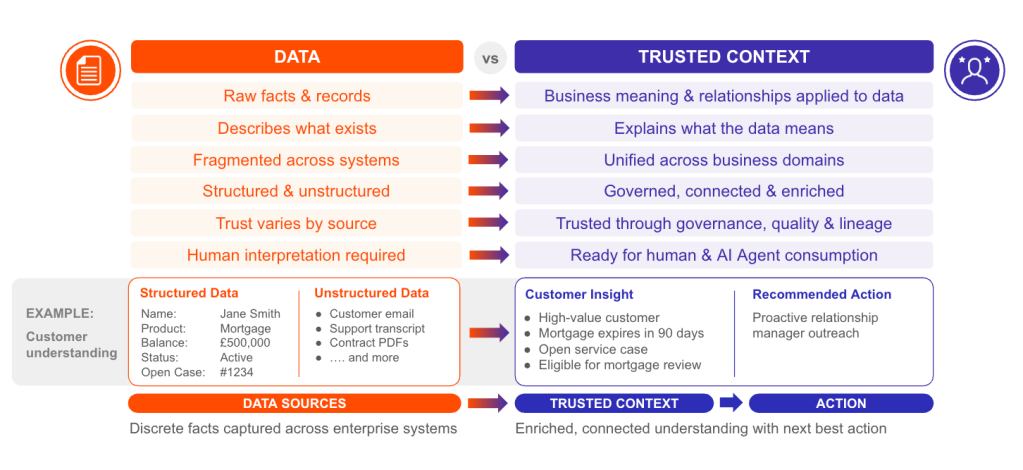
Figure 1: AI Agents need more than data — they need trusted business context
Raw enterprise data tells us what exists but trusted context goes further. It connects, cleanses, governs, enriches and interprets data so that both humans and AI agents understand not only what it means, but also whether it can be trusted and used appropriately. It ensures AI agents have access to the right data, at the right time, with the appropriate governance and privacy controls in place. The result is not merely information — it’s insight, confidence and recommended action.
Instead of presenting disconnected facts, trusted context enables an enriched, connected understanding, enabling AI agents and business users to determine the most appropriate next best action and deliver measurable business value. This distinction is critical: while AI agents can reason over raw data, reliable enterprise decision-making requires trusted context.
For AI agents, trusted context extends beyond traditional data quality. It must also be timely, complete, relevant, authorised and continuously fit for the decisions agents are expected to make. In other words, trusted context must be agent-ready.
What Turns Data into Trusted Context?
Trusted context doesn’t emerge automatically from a data lake, CRM platform or analytics solution but is created through the deliberate application of governance, quality and business meaning. In its simplest form, trusted context is formed when five elements come together as shown in Figure 2 below.
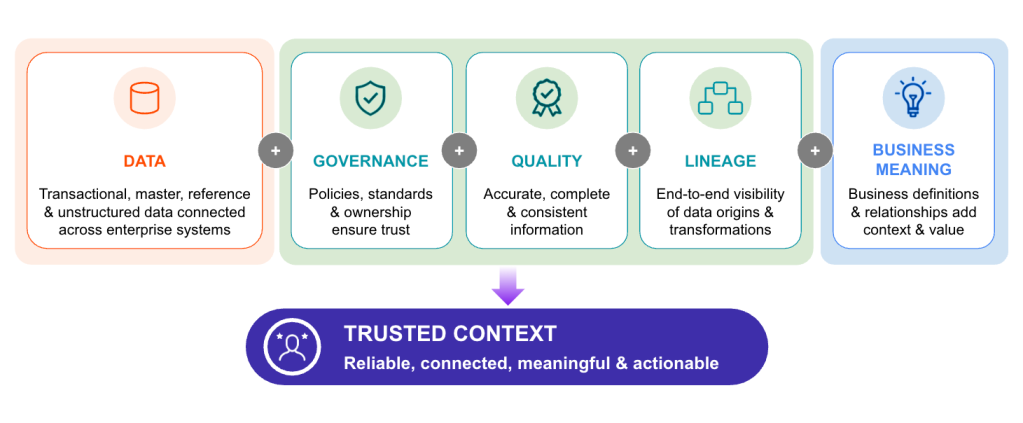
Figure 2: Trusted context transforms raw enterprise data into information that AI Agents can safely understand, reason over & act upon
Together, these elements transform isolated facts into reliable, connected and actionable business context. This is particularly important for AI as humans can often compensate for poor data quality through experience and intuition, while AI agents cannot. If context is incomplete, inconsistent or untrusted, AI agents won’t simply produce poor outputs — they will make poor decisions and execute them faster and at greater scale. In addition, trusted context should not be viewed as static. It must remain continuously agent-ready, i.e. accurate, timely, complete, authorised and relevant to the decisions AI agents are expected to make.
Why Agentic AI Is Amplifying Existing Enterprise Problems
Many organisations are discovering that AI agents expose the weaknesses that already exist within their enterprise architecture.
When agents access inconsistent information from multiple systems:
- Decisions become unreliable
- Actions become duplicated
- Governance becomes fragmented
- Risk increases dramatically
The result is often the opposite of what organisations intended.
Instead of accelerating innovation, AI initiatives create:
- Inconsistent customer experiences
- Higher operational complexity
- Increased governance concerns
- Slower time-to-value
The challenge isn’t the intelligence of the agents themselves; it’s the lack of a trusted, governed foundation beneath them. the intelligence of the agents themselves; it’s the lack of a trusted, governed foundation beneath them.
Why This Matters Now
The emergence of Agentic AI, Model Context Protocol (MCP) and Agent-to-Agent (A2A) communication is fundamentally changing the enterprise technology landscape. Organisations are moving beyond isolated copilots towards ecosystems of collaborating agents capable of making decisions and executing actions autonomously. As the number of agents grows, so does the importance of trusted context, governance and orchestration. Without these foundations, enterprises risk creating a new generation of silos — this time powered by AI.
Enterprise AI is not simply about making enterprise data available. It is about progressively unlocking, understanding, trusting and activating enterprise knowledge to create the trusted context that AI agents need to reason, collaborate and act with confidence.
Translating Business Outcomes into Enterprise Architecture
At a practical level, every organisation embarking on Agentic AI faces three fundamental data challenges:
- Unlock enterprise data wherever it resides
- Trust that data through governance, quality and business meaning
- Activate trusted context to drive intelligent decisions and actions
These business objectives do not replace traditional enterprise architecture. Organisations will continue to rely on Systems of Record to manage core business transactions, Systems of Engagement to interact with customers and employees, and Systems of Insight to generate analytics and intelligence.
However, the rise of Agentic AI introduces three additional architectural foundations that work alongside these existing enterprise systems:
- Context: providing trusted business knowledge for humans and AI agents.
- Control: governing how agents, applications and enterprise systems interact.
- Activation: transforming trusted context into intelligent actions and measurable business outcomes.
Together, these complementary foundations provide the architectural foundation required to support an Agentic Enterprise.
1. Context
Context is responsible for transforming fragmented enterprise data into trusted business knowledge that can be safely consumed by applications, automations and AI agents.
To fulfil this role, organisations require the following capabilities:
- Data discovery and intelligence
- Master Data Management (MDM)
- Data quality management
- Data governance and privacy
- Metadata and lineage management
- Business semantics, ontology and meaning
Together, these capabilities create a trusted understanding of customers, products, suppliers and business entities across the enterprise. Their role is to ensure AI agents operate on trusted context rather than fragmented data.cross the enterprise. Their role is to ensure AI agents operate on trusted context rather than fragmented data.
2. Control
Control governs how AI agents interact with enterprise systems, business processes and other agents.
Some organisations view governance as a constraint on innovation. In reality, the objective is not simply governance — it’s frictionless governance. By embedding security, policy enforcement, observability and compliance directly into an Enterprise Control Plane for AI, governance becomes an enabler rather than a barrier. Organisations can deploy AI agents with greater speed and confidence because the architectural guardrails are already in place, allowing AI innovation to scale without compromising trust, security or regulatory compliance.
To fulfil this role, organisations require the following capabilities:
- Application and data connectivity
- API management
- Security and policy enforcement
- Agent discovery
- Agent governance
- Agent orchestration
- End-to-end observability
These capabilities establish the governance and operational controls necessary to underpin and support AI at enterprise scale. Their role is to provide a unified Enterprise AI Control Plane that ensures execution remains secure, observable and aligned with enterprise policy.
3. Activation
Activation is responsible for converting trusted context into measurable business outcomes.
To fulfil this role, organisations require the following capabilities:
- Unified customer profiles
- Real-time data activation
- Personalisation and decisioning
- Customer engagement
- Workflow integration
- AI-powered interactions
These capabilities ensure trusted context can be delivered consistently to customer-facing channels, business processes and AI agents. Their role is to transform intelligence into action and business value.
Bringing the Three Architectural Foundations Together
Together, Context, Control and Activation provide the architectural foundation for the Agentic Enterprise.
- Context ensures AI agents operate with trusted business knowledge.
- Control governs how AI agents interact, reason and execute across the enterprise.
- Activation translates trusted context and intelligence into actions that deliver measurable business outcomes.
Individually, each foundation delivers value. Together, they enable Agentic AI to operate with the trust, governance and scalability required across the enterprise.
How Trusted Context is Actually Created
We’ve established that AI agents require trusted context but this raises an important question:
How is trusted context actually created?
Many organisations assume that trusted context is simply a by-product of implementing a customer data platform, data lake or AI solution. In reality, trusted context is the outcome of a deliberate architectural process that connects, governs, enriches and activates enterprise data.
Trusted context is not a technology; it is an enterprise capability, and like any capability, it must be intentionally designed. The journey from raw enterprise data to trusted business outcomes is articulated in Figure 4 below and can be represented through four discrete stages.
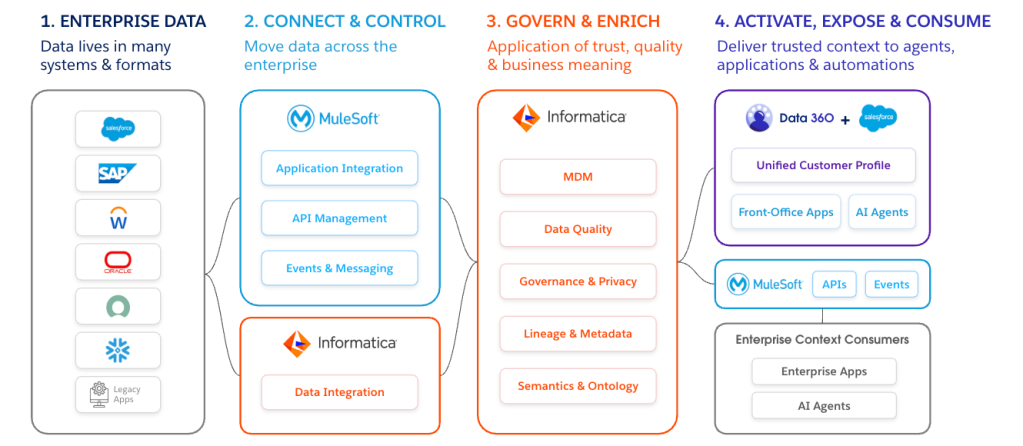
Figure 4: How Trusted Context Is Actually Created & Activated
1. Enterprise Data
Every organisation possesses vast amounts of data spread across applications, databases, SaaS platforms, data warehouses and legacy systems. Individually, these systems provide valuable information. Collectively, however, they often create fragmented views of customers, products, suppliers and business processes. This fragmentation is one of the biggest barriers to effective AI adoption. Before AI agents can reason effectively, organisations must first connect these disparate sources into a coherent information ecosystem.
2. Connect & Control
The next stage focuses on moving, connecting and governing data across the enterprise. This is where both MuleSoft and Informatica play critical roles.
Through Application Integration, API Management and Automation capabilities, MuleSoft establishes a connected yet composable enterprise architecture that enables data to flow securely and consistently between systems.
Informatica, through its Data Integration capabilities, enables enterprise data to be ingested, replicated and transformed across distributed systems, ensuring trusted information is consistently available wherever it is needed for applications, analytics and AI agents.
At this stage, the objective is not to create business meaning but to create controlled access to enterprise information. Without this connectivity layer, data remains trapped in silos and trusted context cannot be established.
3. Govern & Enrich
Once enterprise data has been connected, it must be transformed into something AI agents and business users can trust. This is where Informatica provides the capabilities required to convert connected data into trusted business context.
These capabilities answer the fundamental questions AI agents must be able to rely upon before making decisions:
- Is this data accurate and complete? (Data Quality)
- Can we trust its source and understand how it has changed over time? (Lineage & Metadata Management)
- Is this information governed appropriately for enterprise and AI consumption? (Data Governance)
- Do we have a single, trusted view of the customer, product or supplier? (Master Data Management)
- What does this data actually mean in a business context, and how is it related to other business entities? (Business Semantics, Ontology & Metadata)
- What is the sensitivity of this data? (Data Privacy & Access Management)
Collectively, these capabilities transform disconnected facts into meaningful business knowledge. A customer record, for example, evolves from a collection of transactions and attributes into a trusted understanding of who that customer is, how they interact with the organisation and what actions should be taken next.
This transformation, from raw enterprise data to trusted business context, is what ultimately enables AI agents to reason, collaborate and act with confidence.
4. Activate & Consume
Trusted context only becomes valuable when it is used. The final stage focuses on activating trusted context across the organisation through systems of engagement such as applications, workflows and AI agents.
While the activation layer varies between organisations, many activate trusted context through enterprise data platforms, data lakes or customer data platforms. Within the Salesforce ecosystem, Data 360 plays a pivotal role by providing real-time activation capabilities, including unified customer profiles and zero-copy access to trusted enterprise data.
Data 360 makes trusted context available to:
- Front-office applications
- Business workflows
- AI agents
Rather than forcing every application, workflow or AI agent to reconstruct its own understanding of the business, trusted context is delivered as a reusable enterprise asset. This ensures that every consumer, whether human or AI, is operating from a consistent, governed and trusted foundation.
From Data to Decisions
What makes this model powerful is that it creates a clear separation between data, context and action:
- Enterprise Data provides the raw ingredients.
- MuleSoft and Informatica connect and control access to that data.
- Informatica applies governance, quality and business meaning to create trusted context.
- Trusted context is activated across enterprise engagement platforms, workflows and AI agents. Within the Salesforce ecosystem, Data 360 provides these activation capabilities through unified customer profiles and real-time customer engagement.
The result is a consistent flow from: Data → Trusted Context → Action and ultimately results in better decisions, better experiences and better outcomes. This is why trusted context should be viewed as a strategic enterprise capability rather than a data initiative. It provides the foundation that allows AI agents, applications and people to operate with confidence, consistency and trust across the enterprise.
The outcome is more than trusted context. The outcome is the creation of a composable data foundation comprising reusable APIs, data products, governance services and business context assets that can be consumed consistently by applications, automations and AI agents.
Blueprint for an Agentic Enterprise
In terms of making this real, the architecture blueprint below illustrates how trusted context, governed control and real-time activation combine to support a scalable ecosystem of AI agents across the enterprise.
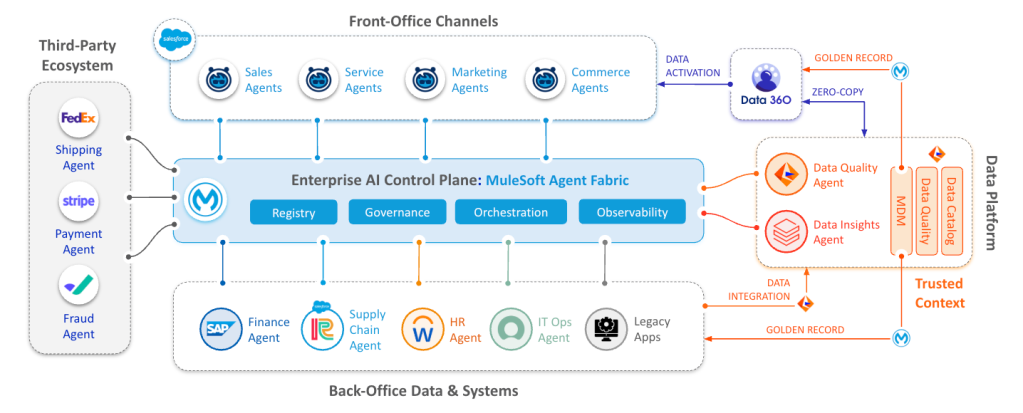
Figure 5: Target architecture enabling context, control & activation for AI Agents
In the blueprint outlined in Figure 5:
- Enterprise systems provide the operational data that is transformed into trusted context.
- The Enterprise AI Control Plane governs how AI agents interact with enterprise systems and trusted context.
- Data 360 makes trusted context available across Salesforce front-office channels, workflows and AI agents.
Together, these capabilities create a scalable architecture capable of supporting multi-agent ecosystems across the enterprise.
Once trusted context has been established, organisations need a mechanism to govern how AI agents access and act upon that information. This is where Agent Fabric provides the Enterprise AI Control Plane.
Just as APIs became the standard mechanism for connecting applications, the Enterprise AI Control Plane provides the mechanism for governing and orchestrating AI agents at scale. Agent Fabric provides this unified control plane which is responsible for:
- Agent Registry and Discovery
- Agent Governance and Policy Enforcement
- Agent Orchestration
- End-to-End Agent Observability
- AI Cost Controls
Through this control plane, Agent Fabric orchestrates interactions between front-office agents, back-office agents, data platform agents and third-party ecosystem agents, ensuring execution remains fully secure, observable and compliant. Rather than creating a collection of autonomous agents operating independently, the organisation establishes a governed ecosystem capable of managing AI agents at enterprise scale.
Activation: Turning Context into Outcomes
Trusted context only creates value when it can be activated, which is where Data 360 plays a critical role.
Leveraging capabilities such as unified customer profiles, golden records and zero-copy data access, Data 360 activates trusted context across customer-facing channels and Agentforce agents. Whether supporting Sales, Service, Marketing or Commerce agents, Data 360 ensures that AI-driven interactions are informed by a consistent and trusted view of the customer. This enables organisations to move beyond static insights and towards real-time engagement, personalisation and decision-making
A Unified Architecture for Enterprise-Scale AI
What makes this architecture compelling is not the individual technologies, but the way they work together.
- Informatica establishes trusted context.
- MuleSoft and Agent Fabric provide governed connectivity, action and control.
- Data 360 delivers real-time activation.
Together they create a closed-loop architecture where AI agents can:
- Access trusted business context
- Execute governed actions
- Collaborate with other agents
- Interact with enterprise systems
- Deliver measurable business outcomes
This transforms AI from a collection of disconnected experiments into a scalable enterprise capability.
From Agents to an Agentic Enterprise
Many organisations today are focused on deploying individual AI agents. The next stage of maturity is far more ambitious.
It is about creating an Agentic Enterprise — an organisation where AI agents operate as trusted participants within the broader business ecosystem, supported by strong data foundations, enterprise governance and real-time activation.
The organisations that succeed will not necessarily be those that deploy the most AI agents. They will be those that deliver the greatest business value through AI and that value will only be realised when AI agents are built upon a strong foundation of trusted context, governed control and real-time activation.
What This Means for Enterprise Architects
Enterprise Architects have a critical role to play in ensuring AI initiatives are built upon reusable, governed and scalable foundations and should:
- Treat Trusted Context as an enterprise capability.
- Design reusable context products rather than project-specific integrations.
- Establish an AI Control Plane early for governance and orchestration.
- Govern agents with the same discipline applied to APIs and integrations.
- Build architectures that assume multi-agent collaboration from the outset.
Final Thoughts
As AI agents become increasingly autonomous, the focus will shift away from the capabilities of individual models and towards the enterprise foundations that enable those models to operate safely, effectively and at scale. This is why Trusted Context matters.
Without trusted context, AI agents operate on fragmented information. Without governance and control, they execute actions without sufficient oversight. Without activation, even the most sophisticated insights fail to create business value.
The organisations that succeed will be those that recognise that Agentic AI is not simply another technology initiative. It is the next evolution of enterprise architecture.
Success will require more than deploying AI agents. It will require establishing the architectural foundations that enable those agents to understand the business, collaborate across domains and act with confidence.
This is where the three foundations of the Agentic Enterprise become critical:
- Context: provide data quality, governance, lineage and master data management.
- Control: provide connectivity, orchestration, governance and observability.
- Activation: provide customer profiles, real-time engagement and AI-powered experiences.
Informatica, MuleSoft and Data 360 provide these capabilities respectively as the foundation for an Agentic Enterprise — one where AI agents are not isolated experiments, but trusted participants within the broader business ecosystem.
AI agents are only as intelligent as the enterprise they operate within and the future belongs not to organisations with the most AI, but to those with the strongest foundations beneath it.
To learn more about how MuleSoft, Informatica and Data 360 can help establish the foundations for your Agentic Enterprise, please contact your Salesforce account team.


