The Historical Echo: 2014 Shadow APIs vs. 2026 Shadow AI
If you look across your organization today, there’s a good chance AI initiatives are emerging faster than governance processes can keep up.
Business teams are experimenting with AI Agents. Developers are integrating directly with large language models (LLMs). SaaS applications are introducing embedded AI capabilities. New autonomous agents are being deployed to automate workflows, support employees, and improve customer experiences.
While these initiatives often deliver immediate value, they can also create a familiar challenge: a growing number of disconnected, difficult-to-govern digital assets.
If that sounds familiar, it should.
A decade ago, many organizations faced a similar problem during the rapid growth of APIs. Teams built APIs to solve local business problems, but over time those APIs became difficult to discover, secure, and manage. The result was API sprawl — a fragmented landscape of services, integrations, and endpoints operating with limited visibility and inconsistent governance.
Today, many organizations are beginning to encounter similar challenges with AI agents.
Questions that once applied to APIs are increasingly being asked about AI:
- Which agents are currently running in production?
- Which models are being used?
- What enterprise data can those agents access?
- What governance controls exist?
- How are outputs monitored and audited?
The technology has changed, but the governance challenge remains remarkably similar.
Fortunately, you don’t need an entirely new playbook.
| Architectural Dimension | API Sprawl (2014 Era) | AI Agent Sprawl (2026 Era) |
| Core Operational Driver | Fragmented microservices and siloed team development. | Proliferation of autonomous agents across fragmented LLM frameworks. |
| Primary Interaction Mode | Deterministic: Static, predictable request-response pathways. | Probabilistic: Dynamic, non-linear multi-agent reasoning chains. |
| Identity & Trust Model | Client IDs, client secrets, and long-lived service accounts. | Cryptographically verifiable agent identity and context-aware OIDC tokens. |
| Primary Protocols | REST, SOAP, GraphQL, and WebSockets. | Model Context Protocol (MCP), Agent-to-Agent (A2A), and provider LLM APIs. |
| Primary Failure Modes | Unauthenticated endpoints, shadow APIs, and data exposure. | Runaway token loops, indirect prompt injection, and unauthorized tool execution. |
| Core Governance Focus | Traffic & Security: Rate limiting, payload validation, and IP whitelisting. | Context & Intent: Guardrails, prompt filtering, cost tracking, and trust boundaries. |
Many of the principles that helped organizations address API sprawl can also help you manage the emerging challenge of AI agent sprawl.
Lesson 1: Build visibility before complexity builds itself
One of the most important lessons from API governance was that you cannot effectively manage assets you cannot see.
As API adoption accelerated, many organizations discovered that different teams were creating APIs independently. Over time, it became increasingly difficult to identify ownership, understand dependencies, and enforce consistent standards.
AI agents introduce similar challenges.
Without centralized visibility, your organization may struggle to answer fundamental questions about which agents exist, what data they access, which models they use, and who is responsible for maintaining them.
A centralized registry for AI assets can help establish that visibility. Depending on your environment, this may include:
- AI agents
- Model providers
- Vector databases
- Knowledge sources
- Governance policies
- Usage metrics
The goal is not to slow innovation. The goal is to make innovation discoverable, reusable, and manageable at scale.
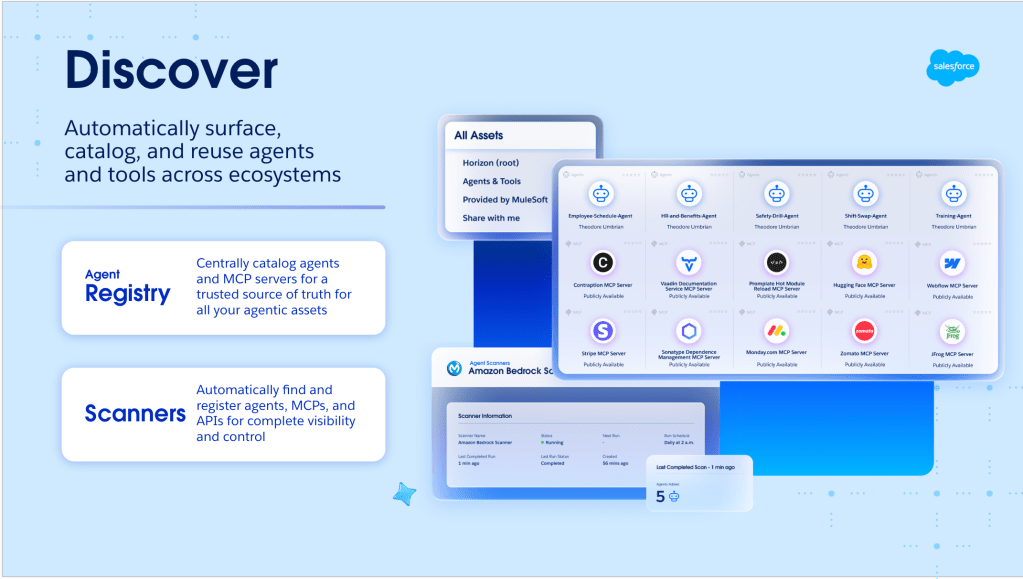
Fig 1: Enterprise AI asset registry
Lesson 2: Establish a governance layer for AI interactions
API gateways became a foundational component of modern integration architectures because they provided a consistent control point for security, monitoring, policy enforcement, and traffic management.
AI systems benefit from the same architectural approach.
When applications and agents connect directly to external models, governance can quickly become fragmented. Different teams may apply different security standards, implement inconsistent controls, or expose sensitive data without realizing it.
A centralized AI governance layer can help address these challenges by providing capabilities such as:
- Access control
- Policy enforcement
- Prompt filtering
- Sensitive data protection
- Rate limiting
- Cost management
- Audit logging
- Model routing
Rather than creating dozens of direct connections between applications and models, you can establish a consistent governance framework that supports both innovation and control.
As AI adoption grows, this architectural layer becomes increasingly important for maintaining security, compliance, and operational consistency.
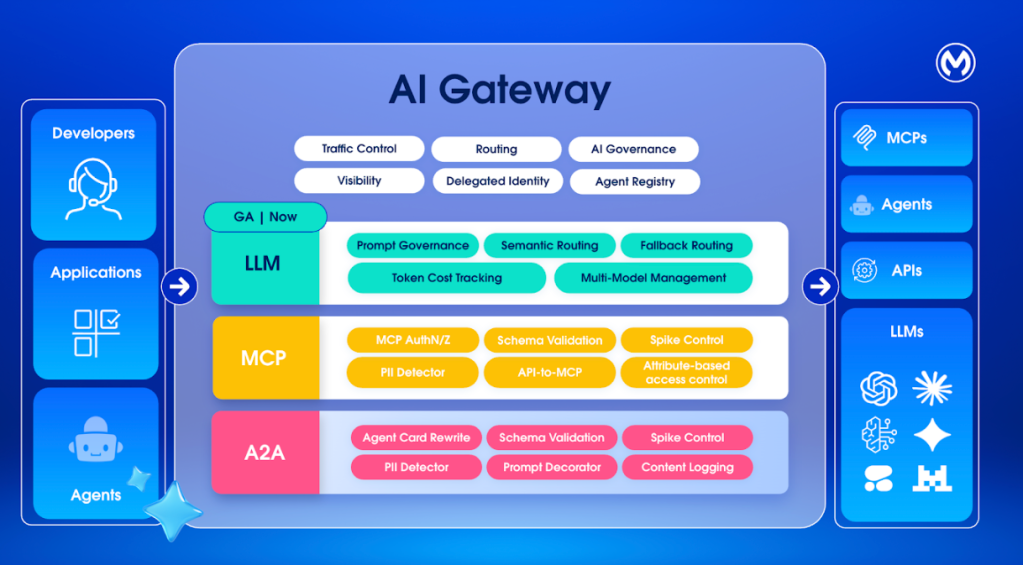
Fig 2: Enterprise AI governance architecture
Lesson 3: Treat observability as a core AI capability
Most organizations already understand the importance of observability for APIs and applications.
You monitor availability, latency, throughput, adoption and failures because visibility is essential for operating systems at scale.
AI systems require the same operational discipline.
While discussions around AI often focus on model performance and capabilities, long-term success depends on understanding how those systems behave in production environments.
Key areas to monitor may include:
- Token consumption
- Agent utilization
- *User satisfaction – Captured at the UI
- *Hallucination rates – Need Specific ML Cycles to run.
- MCP tool call success/failure rates
- Agent-to-agent handoff latency (orchestrator → sub-agent round trips)
- Policy override attempts (how often agents try to bypass policies)
- Security incidents
- Compliance violations
Without observability, it becomes difficult to understand whether AI systems are delivering value or introducing risk.
The organizations that scale AI successfully will not simply deploy intelligent agents. They will establish the monitoring and governance practices needed to operate those agents responsibly and efficiently.
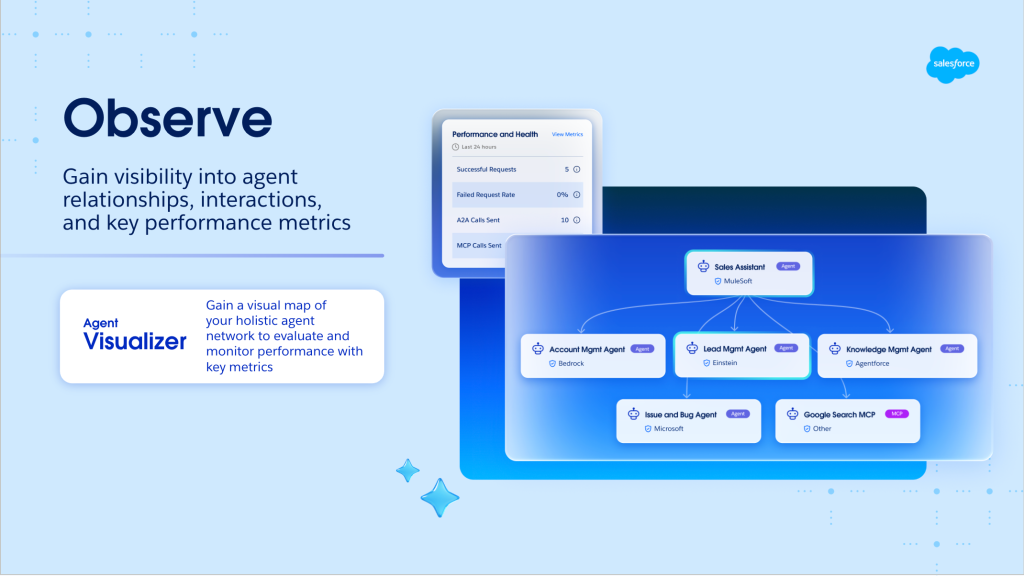
Fig 4: MuleSoft AI observability Capabilities
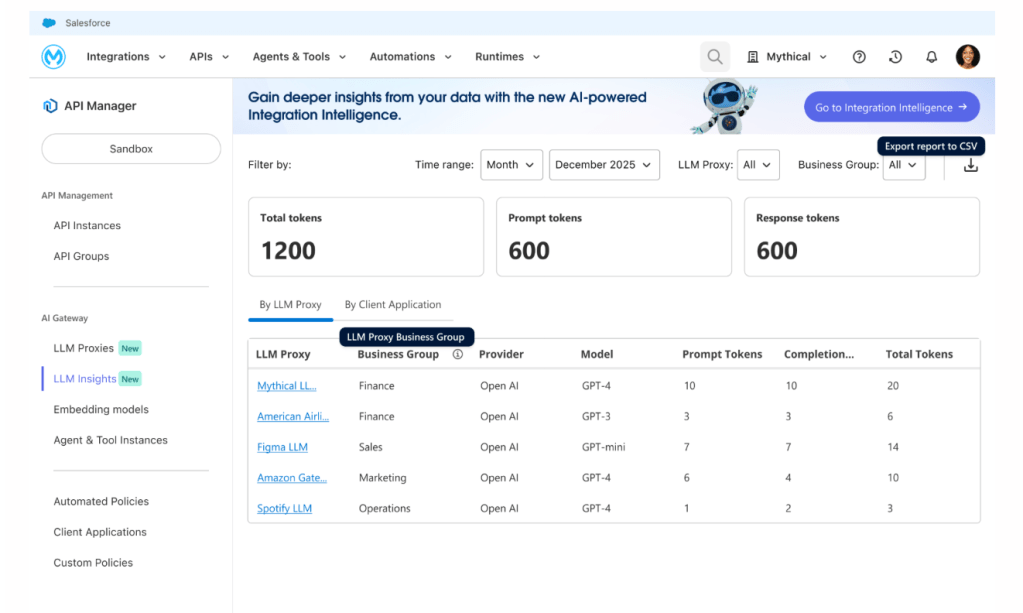
Fig 5: AI observability dashboard
Lesson 4: Design for flexibility, not dependency
The AI ecosystem is evolving rapidly.
New models, providers, frameworks, and standards are emerging continuously. While direct integration with a specific model provider may accelerate initial delivery, it can also introduce long-term architectural constraints.
Many organizations encountered similar challenges during the early stages of integration, when point-to-point connections created tightly coupled systems that were difficult to maintain and evolve.
The same risk exists with AI.
If business applications become tightly coupled to individual model providers, future changes may require significant redevelopment effort. This can limit your ability to adopt new technologies, optimize costs, or respond to changing business requirements.
Instead, consider exposing AI capabilities as reusable services that can be consumed across your organization.
This approach aligns closely with the principles of API-led connectivity, where reusable building blocks reduce duplication and improve agility.
Just as REST standardized how applications exchange data, MCP is emerging to standardize how LLMs securely connect to data sources, making a protocol-aware gateway essential, flexibility will become even more important. Organizations that separate business capabilities from underlying model implementations will be better positioned to adapt as the AI landscape changes.
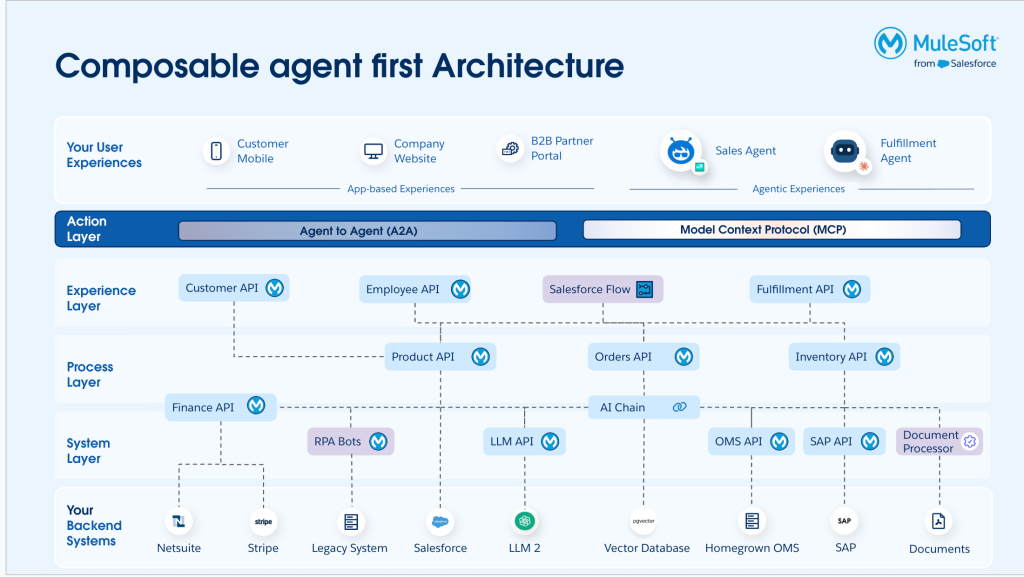
Fig 6: Application network for AI
Future-proofing your enterprise AI architecture
The rise of AI agents presents significant opportunities to improve productivity, automate workflows, and create new customer experiences.
However, scaling AI successfully requires more than deploying new models and agents.
As your AI footprint grows, the same architectural principles that helped address API sprawl become increasingly relevant: visibility, governance, security, observability, and reuse.
Organizations that establish these foundations early will be better equipped to balance innovation with operational control.
Rather than treating governance as a barrier to progress, you can view it as an enabler of sustainable adoption.
The sooner these capabilities become part of your AI strategy, the easier it becomes to scale AI initiatives with confidence.
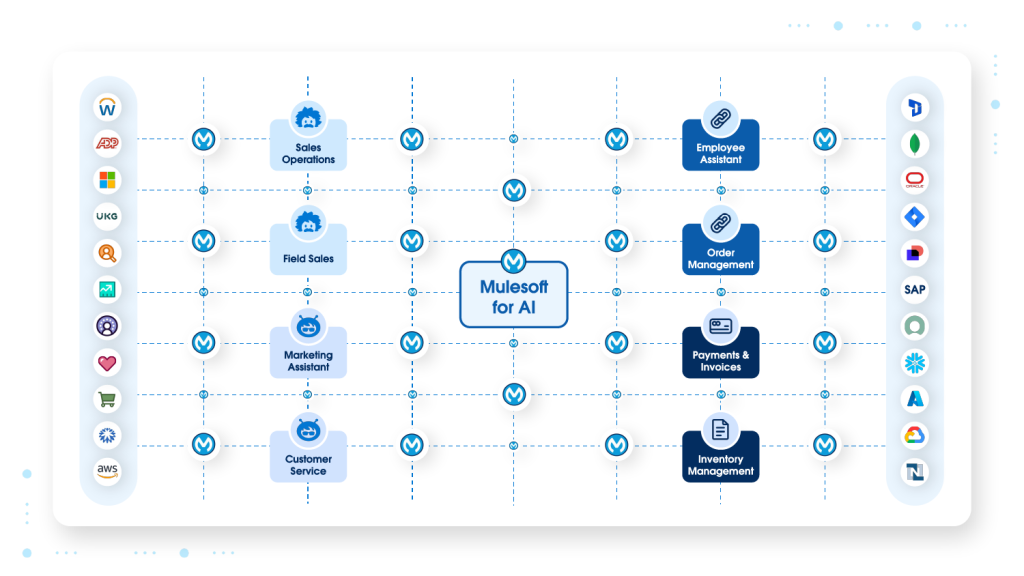
Fig 7: MuleSoft for AI
Conclusion
The transition from API sprawl to AI agent sprawl is less about technology and more about architecture.
Many of the governance challenges emerging around AI are familiar to organizations that have already navigated large-scale API programs. Questions around discovery, security, ownership, monitoring, and reuse remain just as important today as they were during the growth of APIs.
By applying proven governance principles to AI agents, models, and autonomous workflows, you can build an architecture that supports innovation without sacrificing control. A unified platform like MuleSoft supports end to end agentic journey.
The technology may have changed.
The architectural fundamentals have not.